 sales@precisiongroundbars.com
If you build hydraulic cylinders, the shaft material decides how long everything lasts. The wrong grade wears fast, loses shape under load, and causes seal failures you won’t trace back to the bar until it’s too late. Getting the material right from the start saves you that headache.
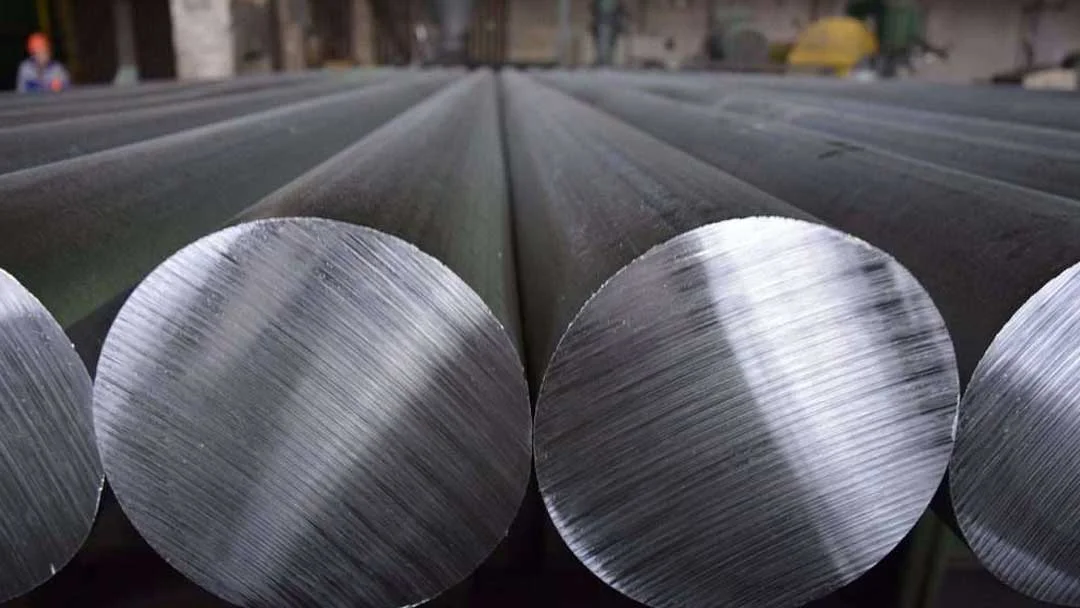
We’ve supplied alloy steel round bar to hydraulic cylinder manufacturers for over fifty years. In that time, 4140 has proven itself as the most reliable grade for shaft applications. The reasons come down to material properties, grindability, and how well it responds to heat treating.
Why 4140 Alloy Steel Round Bar Works Best for Hydraulic Cylinder Shafts
4140 contains chromium, molybdenum, nickel, manganese, and iron working together. Chromium gives the bar excellent hardness penetration through the full cross-section. Molybdenum adds uniform strength, so there are no soft spots hiding inside a hard exterior. That combination makes 4140 tough, wear-resistant, and ductile all at once.
Those three properties matter together in a hydraulic shaft. Wear resistance protects the surface where seals run. Toughness handles pressure spikes without cracking. Ductility gives the bar slight flex before failure rather than sudden fracture. The material also resists creep at temperatures as high as 1,000 degrees Fahrenheit, keeping it stable in hot running environments.
Grinding Brings the Bar to Shaft-Ready Condition
Raw 4140 bar stock doesn’t arrive ready for a hydraulic assembly. Centerless grinding brings it to tight dimensional tolerance, precision roundness, and a clean surface finish. Those three outputs directly protect your seals and bearings from premature wear caused by inconsistent bar geometry.
Straightness matters just as much as roundness. A shaft that isn’t straight vibrates at speed, and that vibration damages bearings and packings over time. We grind for exceptional straightness because of what shaft deflection does inside a hydraulic assembly running continuously under load.
Heat Treating Builds Hardness Through the Full Bar
4140 responds well to heat treating, and doing it right means hardness reaches through the entire cross-section, not just the surface layer. We use a full cross-section method that increases the depth of hardness through the bar. That matters most on larger diameter shafts where surface-only hardening leaves a soft core.
A stress-relieving step is also available alongside heat treating. It reduces internal stresses that can cause the bar to move dimensionally after machining. Cold-drawn, heat-treated bar gives you a tighter diametrical tolerance and better surface condition than hot rolled, making it the better starting point for shafts with close tolerance call-outs on the drawing.
Other Alloy Steel Grades Available Alongside 4140
4140 is not your only option in our alloy steel inventory. We also carry 4130, 4142, 41L42, 8620, and 86L20. Each grade suits different combinations of strength, weldability, and case hardening requirements depending on your application.
If your shaft also faces corrosion exposure, pump shaft quality stainless grades, including 316, 410, 420, and 17-4 PH, are available. Those grades are ground to a diameter tolerance of plus zero and minus 0.002 inch on diameters under one inch OD, giving you a precise reference point to compare against your drawing specs.
Get Your 4140 Alloy Steel Quote Today
We are located at 8150 W 111th St, Palos Hills, IL and serve hydraulic cylinder manufacturers across the Chicago area, including Orland Park, Oak Lawn, and Tinley Park, as well as manufacturers shipping nationwide. Have your diameter, length, quantity, and tolerance specs ready when you reach out.
Call us at (800) 818-0822 or local at (708) 880-7277, Monday through Friday, 8 AM to 5 PM. You can also submit your specs directly at precisiongroundbars.com/submit-a-quote, and our team will respond with what we have available.
Frequently Asked Questions
Why does 4140 outperform plain carbon steel in hydraulic cylinder shafts?
Chromium and molybdenum give 4140 full cross-section hardness and uniform strength that plain carbon grades can’t match, resulting in better wear resistance and dimensional stability under load.
Does 4140 round bar need grinding before going into a hydraulic assembly?
Yes. Centerless grinding delivers the roundness, surface finish, and straightness that seal and bearing performance depend on. Raw bar stock does not meet those requirements.
What other alloy steel grades do you carry?
We stock 4130, 4142, 41L42, 8620, and 86L20. Our team can help match the right grade to your mechanical requirements.
How do I request a quote?
Submit specs at precisiongroundbars.com/submit-a-quote or call (800) 818-0822, Monday through Friday, 8 AM to 5 PM.