 sales@precisiongroundbars.com
Picking the wrong stainless steel grade for a medical application is a costly mistake. A scalpel that dulls fast, an implant that corrodes in fluid contact, or an instrument that fails sterilization tells you the grade was wrong from the start.
At Precision Ground Bars, we have supplied medical-grade stainless steel bar stock to device manufacturers and surgical instrument producers since 1970. The grade selection question comes up every week, so here is how we think through it.
Five Grades, Five Different Jobs in Medical Manufacturing
Not every grade suits every medical use. The right choice depends on what the component does, what environment it lives in, and what load it carries. We stock five grades that together cover the full range of medical manufacturing needs.
Understanding where each grade fits saves time at the design stage and prevents expensive rework later. The sections below break each grade down by its primary strength and the application it serves best.
304 Stainless Steel: Start Here for General Surgical Instruments
304 is the most commonly ordered medical grade we supply. It delivers solid corrosion resistance, machines cleanly on Swiss screw machines and CNC lathes, and holds up through repeated sterilization cycles without degrading.
It suits instrument trays, clamps, retractors, and surgical tools that do not spend extended time in direct fluid contact. If your application is a general surgical instrument and fluid immersion is not a concern, 304 is the practical starting point.
316 Stainless Steel: The Standard for Implants and Fluid Contact
Once a component contacts bodily fluids for any duration, 316 is the correct grade. Its higher nickel content gives it meaningfully better corrosion resistance than 304, and that difference matters in a chloride-rich environment like the human body.
We supply 316 bar stock for implant manufacturers and producers of critical medical equipment. Surgical scissors, forceps, and long-contact tissue instruments are common applications. If fluid contact is part of the design, 316 is where you begin.
317 Stainless Steel: Better Protection in Complex Geometries
317 carries more nickel and molybdenum than 316. That combination improves resistance to pitting and crevice corrosion, which tends to develop in tight geometries, threaded sections, and areas where fluid can pool and concentrate.
If your previous designs in 316 showed crevice corrosion, or your component geometry makes it a likely risk, 317 addresses that specific failure mode directly. It is a narrower specification, but it solves a real problem.
2205 Duplex Stainless Steel: High Strength Where Weight Is a Constraint
2205 Duplex combines high strength and corrosion resistance in a way that pure austenitic grades cannot match on their own. For surgical implants where structural load matters and weight needs to stay low, Duplex lets designers reduce cross-section without losing performance.
Orthopedic and structural implant applications are where this grade earns its place. The strength advantage is real, and it gives design engineers more flexibility when working within tight mass budgets.
Martensitic Stainless Steel: Built for Cutting Instruments
Martensitic stainless steel puts a durable edge on a scalpel. Hardness and wear resistance are the primary properties, and surgical blades need both. A blade that dulls quickly is a clinical problem, and Martensitic grades prevent it.
The tradeoff is lower corrosion resistance compared to austenitic grades. Martensitic is not the answer for implants or fluid contact components. For cutting instruments that cycle through sterilization and return to use, the hardness advantage drives the specification.
Sterilization Compatibility and Biocompatibility Requirements
All five grades we supply for medical applications withstand sterilization without degrading. They maintain structural integrity through autoclave and chemical sterilization cycles, which is a baseline requirement for any surgical or implant-grade material.
For implant and dental applications, materials must also pass testing for corrosion and biodegradation, alloy composition, toxicity, and ion release. The modulus of elasticity matters too, because the material needs mechanical compatibility with bone structure in implant work.
Precision Ground Bar Stock Ready for Your Machining Operation
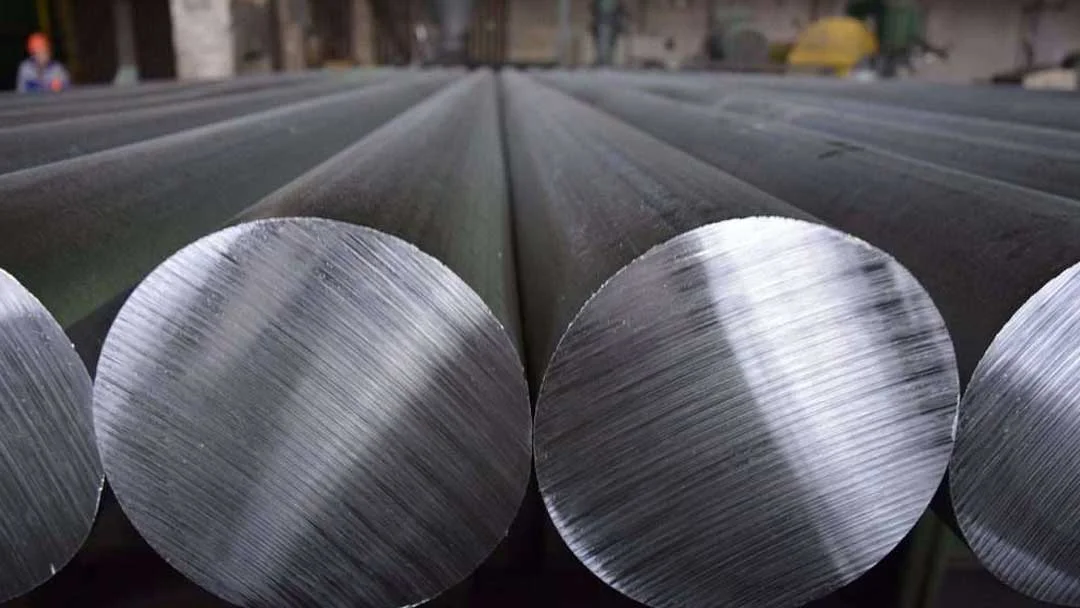
Grade selection is half the work. The bar stock still needs to arrive in the condition your production line expects. We supply medical-grade stainless steel with tight diameter tolerance, precision roundness, and clean surface finish through our centerless grinding services.
OD grinding, bar straightening, bar stock cutting to your specified lengths, and custom packaging are all available. If you run a Swiss screw machine shop or CNC turning operation, we can prepare the bar to the condition your collet and tooling require.
Get the Right Medical Grade Steel for Your Next Project
Call us at (800) 818-0822 or locally at (708) 880-7277, Monday through Friday, 8 AM to 5 PM, at our Palos Hills, Illinois facility. Submit a quote through precisiongroundbars.com/#submit-quote, and we will follow up with what fits your specification.
FAQs
Which grade is most commonly used for general surgical instruments?
304 is the standard choice for surgical instruments not in prolonged fluid contact. It machines cleanly and survives repeated sterilization.
What grade should I specify for a medical implant?
316 is the starting point for implants in fluid contact. For structural or weight-sensitive implants, 2205 Duplex is worth evaluating.
Can these grades survive repeated sterilization cycles?
Yes. All five grades we supply maintain structural integrity through autoclave and chemical sterilization without material degradation.
What services come with your medical grade bar stock?
Centerless grinding, OD grinding, bar straightening, bar stock cutting, and custom packaging. Submit a quote with your specification to confirm.