 sales@precisiongroundbars.com
When engineers compare fatigue strength vs tensile strength for aircraft parts, neither property is automatically more important in every application. Tensile strength helps determine how a material responds to a high applied tensile load, while fatigue strength becomes especially important when a component experiences thousands or millions of repeated load cycles. For many aircraft shafts, fasteners, structural components, and rotating parts, fatigue can become the life-controlling concern even when operating stresses remain below the material’s ultimate tensile strength.
That distinction matters when selecting aerospace bar stock. Precision Ground Bars supplies aluminum, stainless steel, alloy steel, titanium, nickel alloys, and other materials for aerospace manufacturing. The correct grade and condition need to match the actual loading pattern, temperature, environment, geometry, and manufacturing requirements of the part.
Fatigue Strength and Tensile Strength Answer Different Questions
The easiest way to understand the difference is to look at what each property tells the engineer.
What Does Tensile Strength Tell You?
Tensile strength generally refers to the maximum tensile stress a material can withstand during a tensile test before failure.
It is important when engineers need to know whether a material can withstand a substantial applied load without breaking. Tensile properties are therefore part of the material-selection process for highly loaded aircraft structures, fasteners, shafts, landing components, and engine hardware.
However, tensile strength is primarily associated with loading toward a failure limit during a relatively direct mechanical test.
An aircraft component can fail from fatigue even though the repeated operating stress never reaches its ultimate tensile strength.
That is why tensile strength alone does not describe the complete service-life behavior of an aircraft part.
What Does Fatigue Strength Tell You?
Fatigue strength relates to how a material performs under repeated or fluctuating stresses.
Instead of asking how much load a part can withstand once, fatigue analysis asks how repeated loading affects crack initiation and growth over time.
FAA guidance for aircraft engine life-limited parts specifically requires fatigue-life evaluation to consider stress-strain history, temperature history, cyclic fatigue test data, manufacturing processes, vibration, corrosion, high-cycle fatigue, creep, and cumulative damage.
This makes fatigue behavior especially relevant for components that repeatedly rotate, bend, vibrate, pressurize, or experience takeoff and landing load cycles.

Why Fatigue Often Matters More in Aircraft Service
Aircraft are exposed to repeated loading throughout their operating life.
Wings flex. Fuselages repeatedly pressurize and depressurize. Shafts rotate. Engine parts accelerate and decelerate. Landing gear experiences repeated ground-loading events. Fasteners transfer loads through joints over many flight cycles.
FAA fatigue guidance requires certain aircraft structures to demonstrate that they can withstand repeated variable loads expected during service without developing unacceptable fatigue cracking. At the same time, damaged structures must still retain sufficient capacity to withstand specified static or ultimate loads.
This shows why fatigue strength vs tensile strength is not an either-or engineering choice.
The properties answer two different safety questions:
- Can the component withstand the required maximum or ultimate load?
- Can it continue surviving repeated operating loads for the required service life?
For many aircraft parts, both answers must be satisfactory.
A Part Can Be Strong but Still Be Fatigue Sensitive
Consider a shaft that never experiences a load close to its ultimate tensile strength.
If the shaft rotates continuously, a point on its surface may repeatedly move between different stress states. Over enough cycles, a fatigue crack can initiate at a vulnerable location.
The same concept applies to fastener holes, threads, changes in section thickness, scratches, machining marks, and other stress-concentration areas.
This means selecting a material because it has a very high tensile-strength value does not automatically prove that the final aircraft component will have sufficient fatigue life.
Surface Condition Can Change the Fatigue Decision
Fatigue is particularly sensitive to local conditions.
The surface finish, manufacturing process, residual stresses, geometry, and defects can influence where cracks begin. FAA engine guidance specifically states that the manufacturing processes applied to production-grade material need to be considered when evaluating low-cycle fatigue capability.
That connection is particularly relevant to precision ground bar stock.
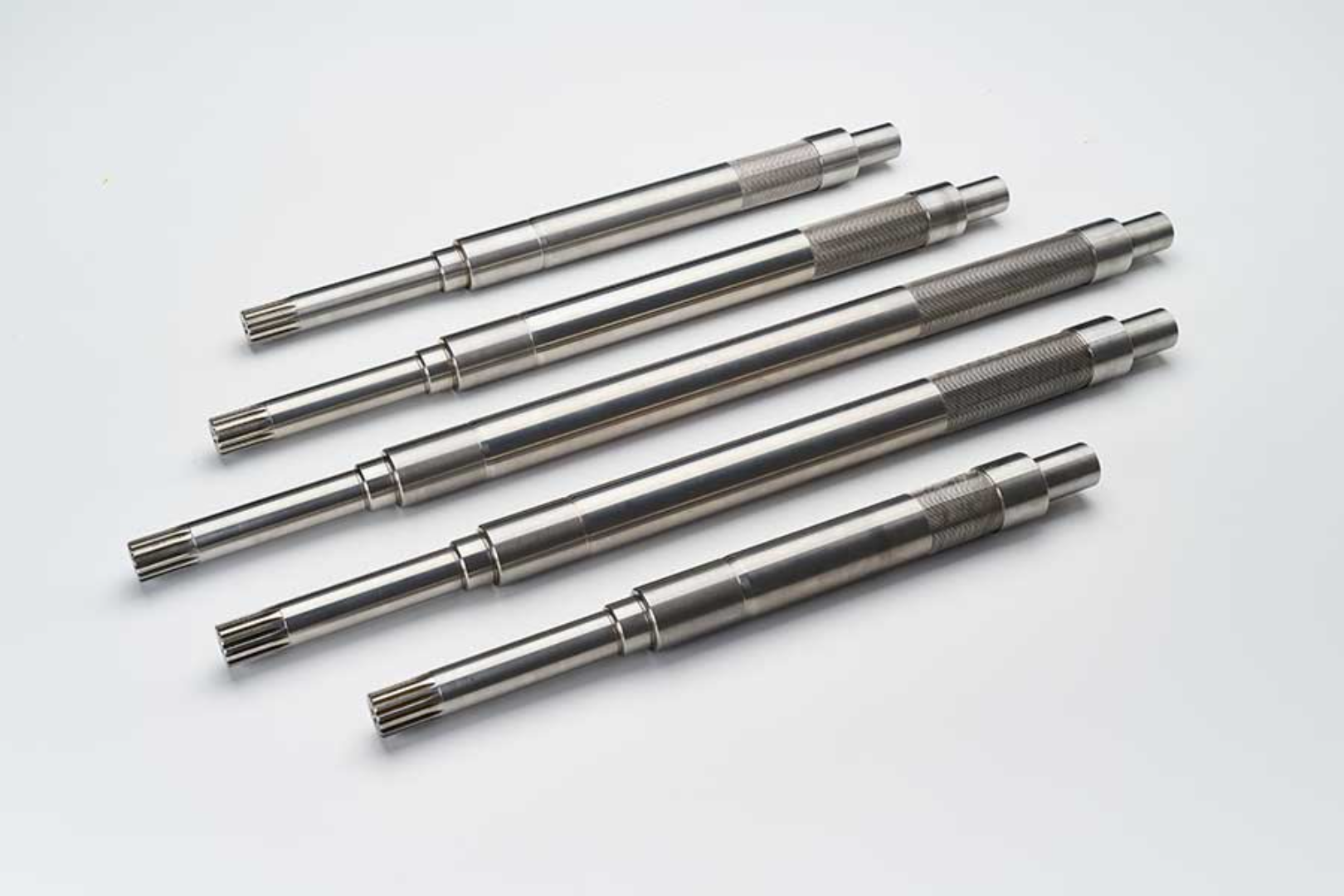
For a shaft, pin, actuator component, or other cylindrical aircraft part, engineers may need to specify more than grade and tensile strength. Diameter tolerance, straightness, surface finish, heat-treatment condition, and the final machining process can all form part of the specification.
A fatigue-sensitive application therefore needs the finished component condition considered alongside the raw material properties.
When Tensile Strength May Carry More Weight
There are applications where maximum load capacity has particularly high importance.
A heavily loaded fastener, structural fitting, shaft, or attachment point may need substantial tensile or yield capability to prevent immediate deformation or fracture under design loads.
FAA damage-tolerance guidance also distinguishes repeated-load fatigue requirements from the ability of a damaged structure to withstand prescribed residual or ultimate loads.
In other words, fatigue performance does not replace static strength requirements.
If the material has excellent fatigue characteristics but cannot withstand the required peak load, it is still unsuitable.
The correct engineering approach is to determine which failure mode is most restrictive for the specific component.
Aerospace Materials Show Why One Number Is Not Enough
Precision Ground Bars supplies several material families used in aerospace manufacturing, and their different attributes illustrate why aircraft material selection should not rely on one strength value.
2024 Aluminum for Aircraft Structures and Rivets
Precision Ground Bars identifies 2024 aluminum as an age-hardening, high-strength aluminum alloy used in aircraft structures and rivets. The material can be strengthened through heat treatment, which means its condition is part of the purchasing specification.
For an aircraft component made from 2024, engineers still need to evaluate the actual fatigue spectrum, geometry, surface condition, and environment rather than selecting the alloy solely because it is described as high strength.
7075 Aluminum for Highly Stressed Aerospace Parts
7075 aluminum is another aerospace material supplied by Precision Ground Bars. The company identifies it as a high-strength, lightweight material with a high strength-to-weight ratio and lists aircraft structures, aerospace construction, and shafts among its applications.
Again, high strength does not eliminate the fatigue question.
The exact alloy condition, cyclic loading, stress concentrations, and component geometry remain important.
A286 for Highly Loaded and High-Temperature Applications
Precision Ground Bars also supplies A286 stainless steel, which is used in aircraft and industrial gas turbines, screws, flange nuts, afterburner parts, and jet-engine components. The material combines substantial strength with corrosion resistance for demanding applications.
For an engine component, FAA guidance makes clear that fatigue-life evaluation may also need to account for temperature, creep, vibration, corrosion, and manufacturing processes.
This is a good example of why no single mechanical property defines aerospace suitability.
Do Not Confuse “Fatigue-Proof” With Infinite Fatigue Life
Precision Ground Bars also supplies material marketed as Fatigueproof steel. Its product information identifies high tensile strength, machinability, and resistance to wear and fatigue among its characteristics.
The commercial grade name should not be interpreted to mean that a component made from it cannot fail from fatigue.
Aircraft fatigue performance still depends on the actual material condition, stress range, number of cycles, geometry, surface condition, environment, and design requirements.
For aerospace engineering, the drawing and applicable material specification remain the controlling documents.
What Should Buyers Specify on an Aerospace Bar Stock RFQ?
If fatigue and tensile performance matter to the finished aircraft component, the RFQ should provide enough information to identify the required starting condition.
Depending on the drawing, specify:
- Exact alloy and grade
- Required material condition or temper
- Applicable tensile or yield requirements
- Required heat-treatment condition
- Bar diameter
- Length
- Diameter tolerance
- Straightness
- Required surface finish
- Grinding or other processing requirements
- Quantity
- Applicable aerospace material or drawing specification
Precision Ground Bars supplies multiple aerospace material families, including titanium, aluminum, nickel alloys, stainless steel, and other precision metals.
Keeping these requirements separate prevents one material property from being used as a substitute for the complete engineering specification.
Which Property Matters More?
The answer to fatigue strength vs tensile strength depends on how the aircraft part is loaded.
For a component exposed primarily to repeated cyclic loading, fatigue performance may control service life. For a component that must withstand a severe peak or ultimate tensile load, tensile strength can become the more immediate requirement. Many aerospace parts must satisfy both.
Aircraft design therefore does not simply choose the material with the highest tensile-strength number or the strongest fatigue reputation. Engineers evaluate the complete loading spectrum, material condition, geometry, temperature, environment, manufacturing process, and expected service life.
At Precision Ground Bars, we supply aerospace precision metals and precision ground bar stock for manufacturers working from defined material and dimensional specifications. Send us the required grade, condition, diameter, tolerance, straightness, surface finish, length, and quantity so we can evaluate the starting bar-stock requirement for your aircraft component.
FAQs
Is fatigue strength the same as tensile strength?
No. Tensile strength describes resistance to a high tensile load, while fatigue performance describes how a material behaves under repeated or fluctuating loading over time.
Can an aircraft part fail below its tensile strength?
Yes. Repeated loading can initiate and grow fatigue cracks even when individual operating loads remain below the material’s ultimate tensile strength. FAA aircraft guidance treats cyclic fatigue life as a separate design consideration from ultimate or residual static strength.
Is fatigue strength always more important for aircraft parts?
No. Its importance depends on the loading condition. Cyclically loaded components can be fatigue controlled, while components exposed to severe static or peak loads also need adequate tensile and yield strength.
Does surface finish affect aircraft fatigue performance?
Manufacturing processes and resulting component condition can influence fatigue capability. FAA engine guidance specifically requires manufacturing processes to be considered when establishing fatigue crack-initiation life.
Should tensile strength alone determine aerospace bar stock selection?
No. Material grade, condition, fatigue requirements, yield strength, temperature, corrosion exposure, dimensions, surface finish, straightness, and manufacturing requirements may all need consideration.